Henry's Car Barn runs four sites: Warwickshire, Hampshire, West Sussex and London. Every one of them opens with the same two words, car storage, and every one of them means something slightly different by it. That is not a weakness to paper over. It is the actual answer to the question most people are really asking, which is not "where is your nearest barn" but "which one of these is built for what I need."
This piece sets that out plainly, using nothing beyond what is already published on the four location pages themselves.
Before the differences, the constant. Every car at every one of the four sites gets the same treatment, whatever it is worth. That is not a slogan, it is the operating rule behind all four pages: dehumidified indoor storage rather than a cold garage, a full inspection and set of photographs taken the day the car arrives, a breathable cover, a battery conditioner running for the whole stay, and the brakes cycled before the car goes into storage rather than after it comes out. A pre-war car and a current hypercar receive the identical process. The differences below sit on top of that baseline, they do not replace it.
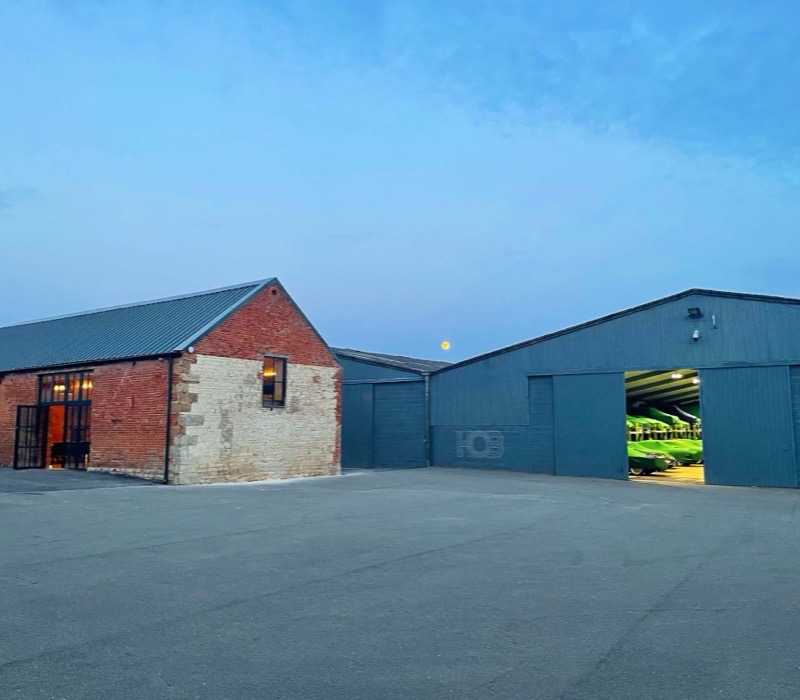
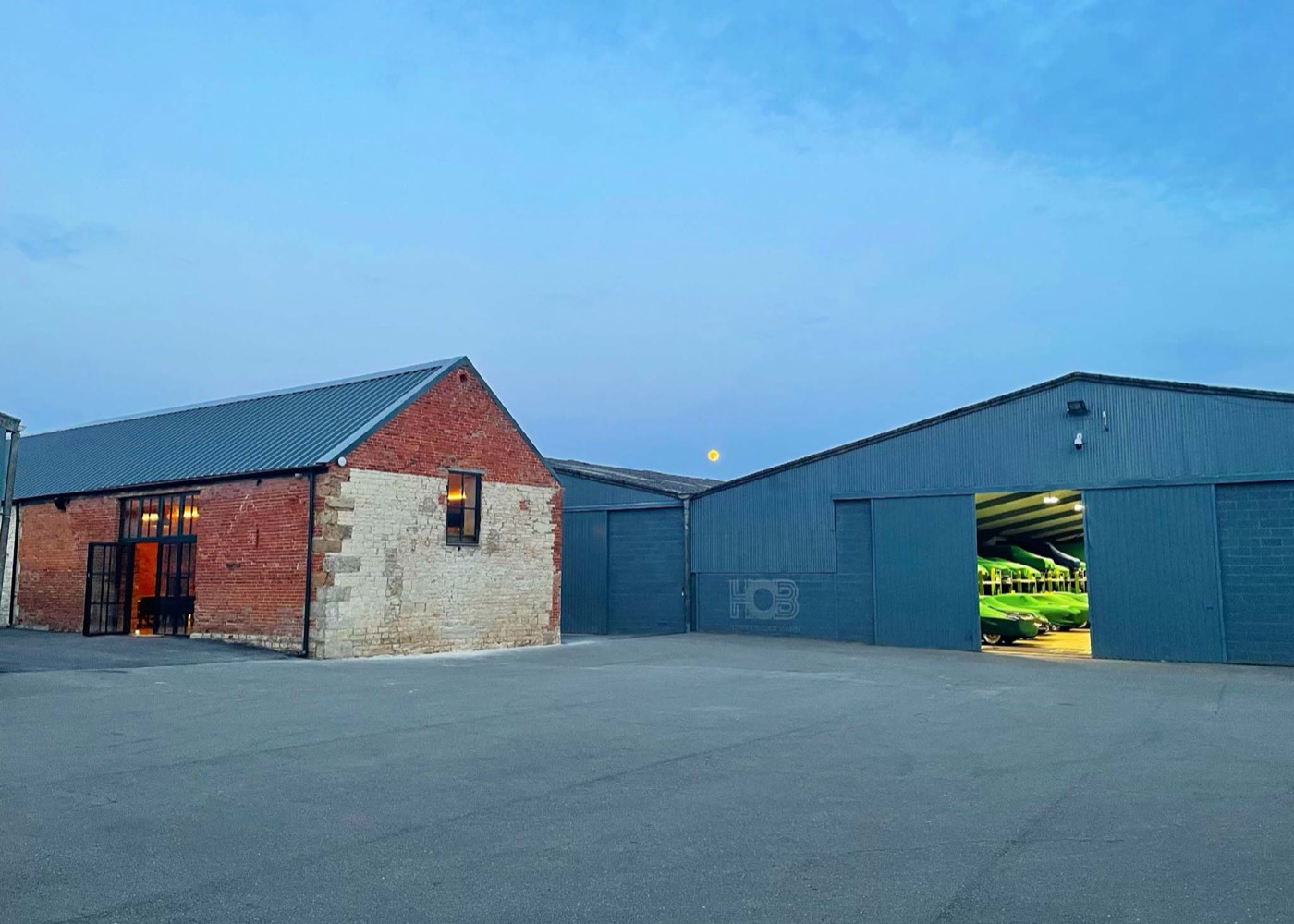
Warwickshire is where the business started, in 1984, and the main site still sits there today, at the end of a mile-long private drive behind electronic gates with automatic number plate recognition, watched by a local security company around the clock and covered by CCTV and motion sensors inside the barns.
Two things make this site different from the other three, and both are practical rather than sentimental. First, it is the only one of the four with a workshop on site. Pennant Classics works there, on recommissioning, servicing and engine builds, with experience running from pre-war Vauxhall 30/98s and Alfa Romeo 8Cs through to post-war sports racing Jaguars and Ferraris. Detailing, decontamination, paint protection and body repair happen there too, all handled in house, which means a car being prepared for an event, a sale or a season does not need to leave the site or be handed to anyone else. Second, the motorway network converges here: the M40, M42, M6 and M5 are all close by, so despite sitting in the Midlands this site is genuinely easy to reach from most of the country. Owners who want their storage and their workshop under one roof choose Warwickshire for that reason even when they do not live nearby.
Access is twenty four hours, the drive is fully accessible to HGVs for anyone bringing a car themselves, and the site also houses the HCB clubhouse.
Cars kept near the south coast have a harder life than cars kept inland. Salt in the air and damp through the winter get into a car in ways a typical home garage, which was never built to keep moisture out, cannot prevent. An unheated, undehumidified garage tracks the outside temperature with a lag, so when warmer, damper air arrives after a cold night, moisture condenses on metal that is still cold, including parts an owner never sees, like the inside of an exhaust or the face of a brake disc. Through a wet coastal winter, that cycle repeats constantly.
The Hampshire site exists to remove that specific problem: dehumidified storage instead of a garage that merely locks the car away, with the same inspection, photography, battery conditioning and pre-storage brake cycling as every other site. It particularly suits owners with a second home in the area and a car that sits between visits, seasonal cars that need placing at the end of a season, and anyone whose insurer is asking for secure, garaged storage rather than a driveway.
West Sussex solves a different problem again. Cars in this county tend to get used, between events, runs and shows, and that creates a need the other sites are not specifically built around: the car has to come out ready to be seen, often at short notice, not merely intact.
A car that has been standing is rarely ready to be driven, let alone shown. The battery is down, the tyres have taken a set, the brakes carry a film of surface rust and the fluids have not been checked since the car went away. HCB's answer is to do that work on the way in rather than the way out: brakes are cycled before storage rather than after, the battery stays on a conditioner the whole time, and fluids are checked and topped up on arrival, with the condition photographed so there is a record of exactly how the car went in. The site also handles transport to events and back, and detailing, decontamination, paint protection and bodywork are handled by HCB's own people in HCB's own workshop, so a car can be made ready without being passed between specialists. Through the Collecting Cars partnership, the same site can also handle a car through a sale, from inspection and photography to storage during the auction and the handover.
West Sussex shares the same coastal and downland damp problem as Hampshire, and the same dehumidified answer to it, but the site is built around a different rhythm: a car that is expected to come out, not one that is expected to stay put.
The London site answers a more basic problem than the other three: space. Keeping a collection, or even one car beyond daily use, is rarely realistic in the city, and street parking is not a serious storage option for a car worth protecting. The service is built around that reality, collecting from the owner's address and storing the car indoors, under climate control, with the same battery conditioning, cover and inspection regime as every other site. It serves London itself and the Home Counties around it, and takes anything from pre-war classics to modern hypercars.
The four sites are not simply the same service repeated in four postcodes, and the nearest one to home is not automatically the right one. What actually decides it is which problem is being solved.
Some owners fit more than one of these at once, and the sites are not mutually exclusive. An owner who lives in London but wants an engine rebuild, for instance, may still choose to have the car collected and taken to Warwickshire for exactly that reason.
Yes. Dehumidified storage, arrival inspection and photography, breathable covers, battery conditioning and pre-storage brake cycling apply at every site, regardless of what the car is worth.
Yes. Pennant Classics operates on the Warwickshire site. At the other three locations, detailing, decontamination, paint protection and bodywork are still handled by HCB's own people in HCB's own workshop, rather than by a third party, but the site itself does not have a workshop on it the way Warwickshire does.
Yes. Distance from home is one factor, not the only one. Access to the on-site workshop, the coastal damp problem, and how often a car needs to come out for use all matter as much as, or more than, geography.
Yes, collection from the owner's door is part of the service at every site, alongside the option to bring a car in yourself.